Exam season is creeping up on us. The stress, the late nights, the caffeine-fueled cramming–it’s brutal.
But what if studying didn’t have to feel like academic punishment? What if you could study in a way that actually works for you–without burning out?
Whether you’re preparing for finals or just trying to pass that one class with the impossible professor, here are 17 study ideas that will help you retain more, stress less, and maybe even enjoy the process a little.
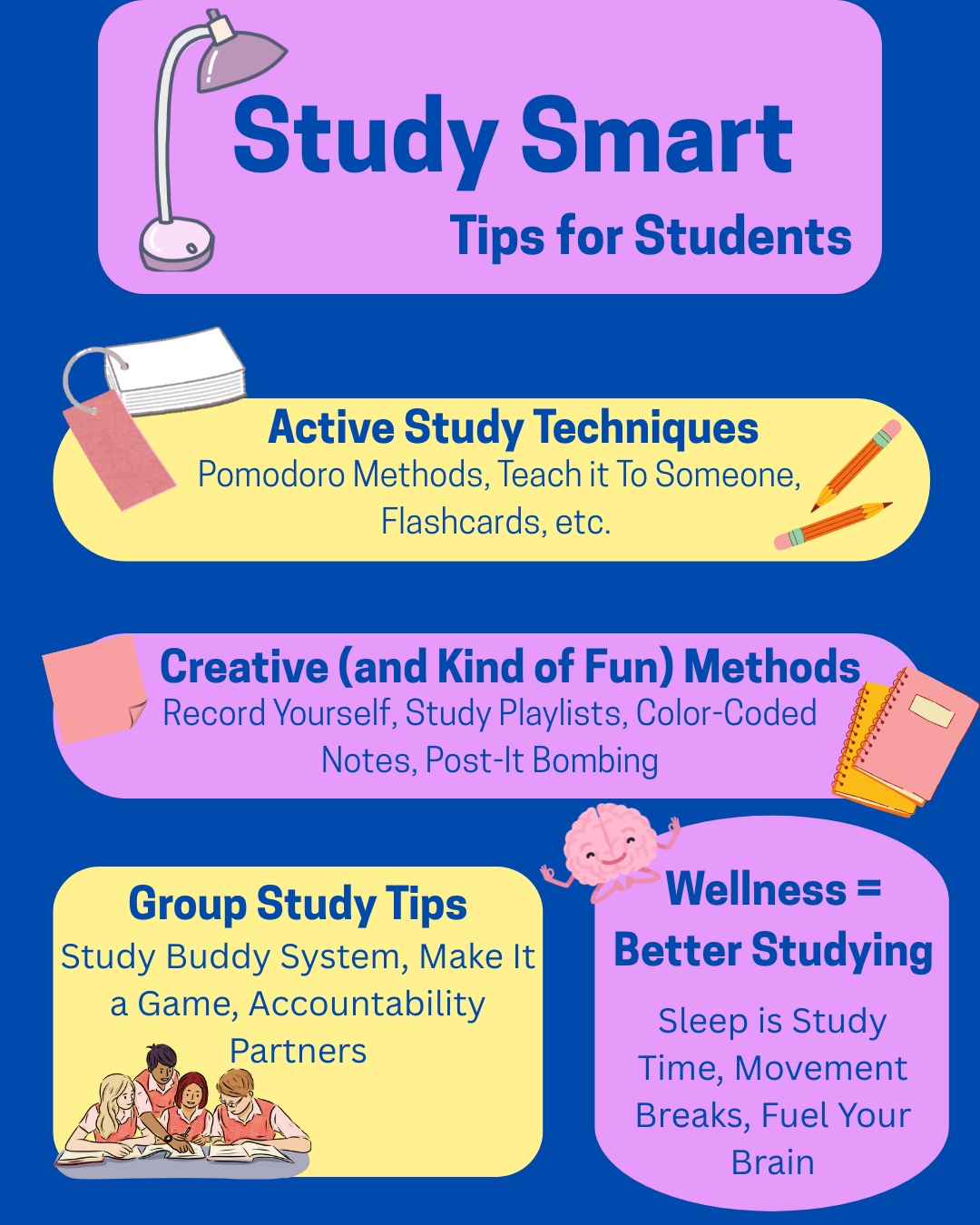
Active Study Techniques
- Pomodoro Method- This one’s a classic for a reason. Study 25 minutes, then take a 5-minute break, repeat. After four cycles, take a longer break (15-30 minutes). This method helps fight burnout and keeps your brain alert without overloading it.
- Teach It To Someone- If you can’t explain it simply, you don’t understand it well enough. Try teaching a concept to a friend, your pet, or even an imaginary class. This forces you to process the information at a deeper level.
- Flashcards- Apps like Anki or Quizlet use spaced repetition which is a scientifically proven way to lock information into your long-term memory. They’re especially great for vocabulary, formulas, and quick facts. I find it easier to use digital flashcards but if writing them out helps you, do it.
- Mind Maps- For my visual learners out there, this one’s for you. Start with a central topic and branch out with related ideas. It’s great for subjects that have a lot of interconnected concepts, like biology, history, or literature.
- Practice Tests- Don’t just read your notes–use them. Practice tests are one of the most effective ways to prepare. Look for old exams, make your own questions, or even Google practice quizzes on the topic.
- Blurting- This underrated method is simple: look at a topic, close your notes, and write down everything you remember. Then check what you missed and try again. It helps with active recall and confidence.
- Writing Repetition- This is a powerful study tool because it reinforces information through active recall and muscle memory. By writing something down multiple times, you’re more likely to understand it deeply and retain it longer. This method is great for formulas, definitions, or key concepts.
Creative (and Kind of Fun) Methods
- Record Yourself- Read your notes out loud and record them on your phone. Then listen to them while walking, cleaning, or driving. It’s like your own personal podcast, except you’re the nerdy host.
- Study Playlists- The right music can boost focus. I like to listen to instrumental music while studying. No lyrics = fewer distractions. Classical music is also great background noise.
- Color-Coded Notes- Use fun highlighters or pens in different colors for definitions, examples, dates, and formulas. It makes revisiting your notes easier–and way less boring.
- Post-It Bombing- Write key concepts or formulas on sticky notes and place them around your room–on your mirror, laptop, or wall. The more you see them, the more they stick (literally and mentally).
Group Study Tips
- Study Buddy System- Find someone in your class and set up regular study sessions. Quiz each other, explain tough topics, or even just sit in silence while working–it helps keep you accountable and motivated.
- Make It a Game- Turn your study session into a quiz show. Use Jeopardy-style games or flashcard battles to keep things engaging. A little competition can go a long way when you’re trying to memorize 50 definitions.
- Accountability Partners- This isn’t about studying with someone–it’s about checking in. Share your goals with a friend and text each other updates: “I’m gonna finish two chapters tonight, hold me to it.”
Wellness = Better Studying
- Sleep is Study Time- Sleep is extremely important–especially in college. Your brain processes and stores what you learn while you sleep. Pulling all-nighters might feel productive in the moment, but it tanks retention. Aim for 7-8 hours of sleep the night before an exam.
- Movement Breaks- Don’t sit for long periods of time. Get up and stretch, walk around, do a few jumping jacks. Physical activity boosts blood flow to your brain and helps you refocus.
- Fuel Your Brain- Many college students live off of energy drinks, coffee, tea–but that’s not a meal. Eat real nutritious food such as protein, complex carbs, and lots of water. Brain fog is real when you’re dehydrated, hungry, or living off vending machine snacks.
Final Thoughts: You Got This
Studying does not have to be a struggle-fest. With the right strategies, it can actually feel manageable–maybe even empowering.
Mix and match the methods above until you find what works for you. Everyone learns differently so don’t be afraid to experiment.
The most important part? Start early (even if it’s just a little at a time), stay consistent and take care of yourself in the process.
Once you figure out what works for you, you’ll have no problem crushing your exams.